Ayrton Cecillano
Client Success Manager

Most B2B owners know they should be on YouTube. They've watched competitors grow channels, seen inbound leads referenced in case studies, nodded along at conferences when someone says "content is the new sales team."
And then they go back to their desk and do nothing about it, because it feels overwhelming and the ROI feels too uncertain and honestly, where do you even start.
This post is for that person. Not the person who needs convincing that YouTube works. The person who's already convinced and just needs a clear picture of what the first 12 months actually look like, what's realistic, what the milestones are, and what separates a channel that generates real pipeline from one that just sits there looking like someone tried.
Let's go through it properly.
First, a Realistic Frame on What "6-Figure Pipeline" Means
Before the month-by-month breakdown, it's worth being honest about what we're actually talking about.
A 6-figure inbound pipeline from YouTube in 12 months doesn't mean $100K in closed revenue. It means $100K or more in qualified opportunities entering your sales pipeline, sourced directly from YouTube viewers who found you through content and reached out.
For most B2B service businesses with deal sizes in the $5K to $50K range, that's anywhere from two to twenty new clients a year coming from content alone. Depending on your niche and close rate, that could mean your YouTube channel becomes your single highest-ROI marketing channel within a year. Which is exactly what happens for founders who build this properly.
Research from GTM 8020 confirms that for most B2B channels, full business impact measured in leads and revenue typically emerges within 6 to 12 months of consistent publishing. The first half of that timeline is largely invisible. The second half is where things start compounding visibly.
Understanding this timeline upfront matters because it changes how you measure success in the early months. If you're expecting leads in month two, you'll quit before the machine is built.
Months 1 and 2: The Foundation Nobody Wants to Spend Time On
Here's the honest version of what months one and two look like.
You're not filming yet. Or if you are, you're filming in parallel with a set of decisions that most channels skip entirely and then wonder why nothing works.
The first thing to sort is your positioning. Specifically, who you are trying to reach, what problems they are actively searching for answers to, and what angle makes your content meaningfully different from everything else on the topic. This sounds obvious. It almost never gets done properly.
SellOnTube's research on B2B YouTube channels found that the most common failure pattern is a business channel with hundreds of subscribers and zero clients ever traced back to it. That outcome almost always starts in this phase. The channel got built without a clear answer to who specifically it was for and what it was trying to make them do.
The second thing to sort is your content architecture. This is the structure of topics that will make up your channel. A functioning B2B YouTube channel needs three layers of content working together.
The first layer is search-based content. These are videos built around specific queries your ideal clients are already typing into YouTube. The kind of stuff they search when they have a problem and want an answer. This is your primary discovery layer, the videos that bring strangers to your channel.
The second layer is consideration content. Deeper videos that address objections, explain your methodology, walk through how you think about problems. This is what turns a casual viewer into someone who trusts your thinking.
The third layer is conversion content. Case studies. Process walkthroughs. "What it looks like to work with us" content. This is what moves someone from considering you to contacting you.
Most channels only build the first layer and wonder why they get views but no clients. Build all three from the start.

Months 3 and 4: The Library Phase
This is the grinding part. There's no way around it.
You're publishing consistently. One solid, search-optimised video per week is the baseline. Some weeks it feels like shouting into a void because your view counts are low and nobody is commenting and you have no idea if any of this is working.
It is working. Just not visibly yet.
YouTube's algorithm needs roughly 20 to 30 videos of data to properly understand your channel and start recommending it to the right audiences. This is the period where that data is being built. Think of it less like marketing and more like laying infrastructure.
What matters most during this phase is ruthless consistency on a few things. Every video needs a clear hook in the first 30 seconds that signals exactly what the viewer will get and why it's worth staying for. Every video needs a specific, proportionate call to action, not a generic "subscribe and like" but an actual next step that makes sense for where a viewer is in their decision-making. And every video needs to be genuinely useful, not a thinly veiled pitch dressed up as educational content.
IMAGE here - 1769509809050.jpeg
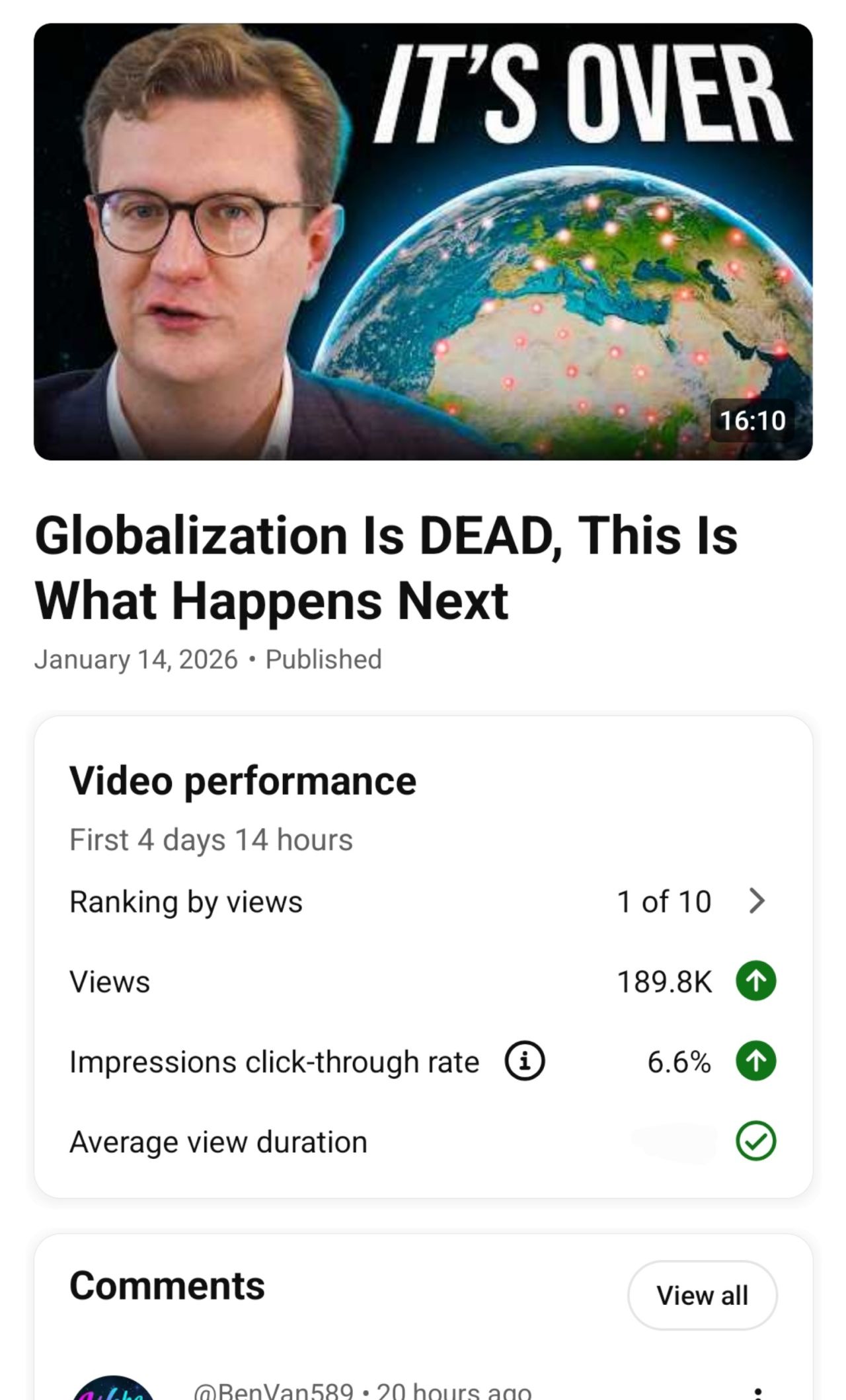
Buyers can feel the difference. A video that actually helps them understand something closes deals. A video that's really just a sales pitch with a how-to title wastes everyone's time and tanks your retention metrics, which directly hurts how much the algorithm distributes your content. Once you actually master those algorithmic levers, like packaging, hooks, and sustained curiosity, the platform starts pushing your content to your exact ICP, a dynamic I recently broke down on LinkedIn using our work with Nomad Capitalist as an example.
Months 5 and 6: The First Signals
Something starts to shift around month four or five for channels that have been consistent.
Earlier videos start accumulating search traffic. You might notice a video from month two suddenly getting views from people who weren't your subscribers. Your channel starts showing up in search results for queries you targeted. And, if the content funnel is properly built, you start seeing the first inbound contacts.
Most B2B YouTube channels start seeing qualified leads between months three and six, specifically during what's called the compounding phase where older videos continue generating views as new ones build on channel authority. These early leads tend to be high-quality precisely because the person took the time to watch multiple videos before reaching out. They already know how you think. They've already decided they believe in your approach. The sales conversation is fundamentally different from a cold lead.
This is also the phase where your analytics start telling you things worth acting on. Which videos are retaining viewers longest. Which topics are driving search traffic. Which CTAs are getting clicked. You should be adjusting your content plan based on this data, not just publishing according to the original plan and hoping it all works out.
The channels that grow fastest do a proper analytics review every four weeks and deliberately shift their content mix based on what the data is showing. It's not complicated. It just requires actually looking at the numbers rather than just producing content.
Months 7 to 9: The Pipeline Becomes Real
If months one through six were infrastructure, months seven through nine are where you start seeing the commercial output.
By this point you have 25 to 35 videos live. Some of them are ranking consistently. Your search-based videos are pulling in qualified viewers. Your consideration layer is building trust with people who found you through those videos. And your conversion content is capturing the ones who are ready to act.
The inbound contacts should be arriving with meaningful regularity by now. Not a flood, probably, but a steady trickle of qualified people who've done their homework and are ready to have a real conversation.
What you're also doing in this phase is doubling down on what's working. If a particular topic is pulling in three times the views of your other videos, you need more content in that topic cluster. If a specific CTA is converting at a high rate, you need to use it consistently across all your content. The data from months three through six tells you exactly where to concentrate your effort in this phase.
95% of B2B buyers report that video content plays a crucial role in shaping purchase decisions. By month nine, the buyers who have been watching your content for three or four months are starting to enter their decision window. The trust your channel built during that time is paying dividends in the quality and rate of your inbound.
Months 10 to 12: Compounding Becomes Visible
This is the phase that makes founders who built this properly feel like geniuses.
Videos from month two are still generating leads. Your search rankings have solidified. New videos get distributed faster because the algorithm understands your channel and your audience. And your total content library, 40 to 50 videos by this point, is working as a continuous trust-building system that operates 24 hours a day without your involvement.
The pipeline math also starts making sense in a way it didn't earlier. If you're in a B2B service business with an average deal size of $10K and you're generating five to ten qualified inbound conversations a month from YouTube, a reasonable close rate puts you well above six figures in pipeline. Not all of those will close. But the ones that do close faster, with less price resistance, because the relationship was already built through content before the first conversation.
Companies using video marketing as part of their strategy report 49% faster revenue growth than those that don't. That gap is a direct result of what the last three to four months of a properly built YouTube channel produces. The compounding effect is real, and it continues accelerating beyond month 12.
At ChannelCraft, we build high-performance YouTube channels that not only look great but also drive real business results.