Ayrton Cecillano
Client Success Manager
We talk to B2B founders every week at ChannelCraft. And one conversation comes up more than any other.
"I know I should be on YouTube. I just haven't pulled the trigger yet."
Sometimes it's been six months of knowing. Sometimes it's been two years. There's always a reason it hasn't happened, a busy quarter, a client situation, the vague sense that the timing isn't quite right. And then another month passes.
This week, something happened that makes that conversation a lot harder to have.
On May 13, YouTube took the stage at Lincoln Center for Brandcast 2026, their annual presentation to the media and advertising world. The message wasn't subtle. YouTube CEO Neal Mohan, alongside YouTube's CBO and Google's President, stood in front of the industry and declared that we have officially entered the YouTube era, positioning YouTube not as a platform competing for relevance, but as the outright future of all media.
That's not marketing language. That's a structural statement backed by numbers that are genuinely hard to argue with.
What YouTube Just Told the World
According to Nielsen, YouTube now reaches over 238 million people aged 18 and over across all devices in the US alone. That's larger than the combined prime-time reach of every major TV network. And YouTube ad revenue hit nearly $10 billion in Q1 2026, making it one of the most commercially valuable media environments in the world.
That's the scale of the platform your buyers are already on.
What makes this relevant to you specifically as a founder isn't the headline number. It's what YouTube announced alongside it. Three platform updates rolled out this month that directly change how B2B content performs and how buyers discover service providers.
Picture-in-picture is now free and global. Your long-form videos keep playing while buyers compare tools, check your pricing page, and research competitors simultaneously. According to May 2026 YouTube SEO analysis, this is a significant development for educational and B2B content specifically, because the video keeps building familiarity even while the buyer is doing active research elsewhere.
YouTube Shorts now appear on Google TV homescreens. That 45-second clip of you breaking down a client problem, repurposed from your long-form video, is now appearing on living room screens in the homes of the exact decision-makers you want to reach. In the same environment where they used to watch cable news and HBO.
Google Preferred Sources expanded to all users globally. YouTube channels with real topical authority are now surfacing inside Google Search results directly. One well-built YouTube video is now findable in two search ecosystems at once.
The platform didn't just grow. It changed shape. And the way B2B buyers find and evaluate service providers changed with it.
Why This Makes the Fence More Expensive Than It Looks
Here's the thing we've watched happen with every major YouTube shift over the past few years, and it's playing out again right now.
The founders who act on a platform shift early build compounding advantages that are genuinely hard to close later. Not because they're smarter or work harder. Because YouTube rewards consistency and authority over time, and both of those things are functions of having started.
A founder who started building their YouTube channel 18 months ago has videos that have been accumulating search rankings, watch time, and trust signals the entire time. Their newer videos benefit from that foundation. Their channel shows up in Preferred Sources. Their Shorts have an existing audience to land in. Their content has a track record the algorithm already understands.
A founder starting today is starting from zero. That's still worth doing, and we build channels from zero every month at ChannelCraft. But the gap between starting now and starting six months ago is real and measurable. (And as I just pointed out on LinkedIn, that gap costs you more than just leads you're missing out on a long-form media asset that actively multiplies your enterprise value.)
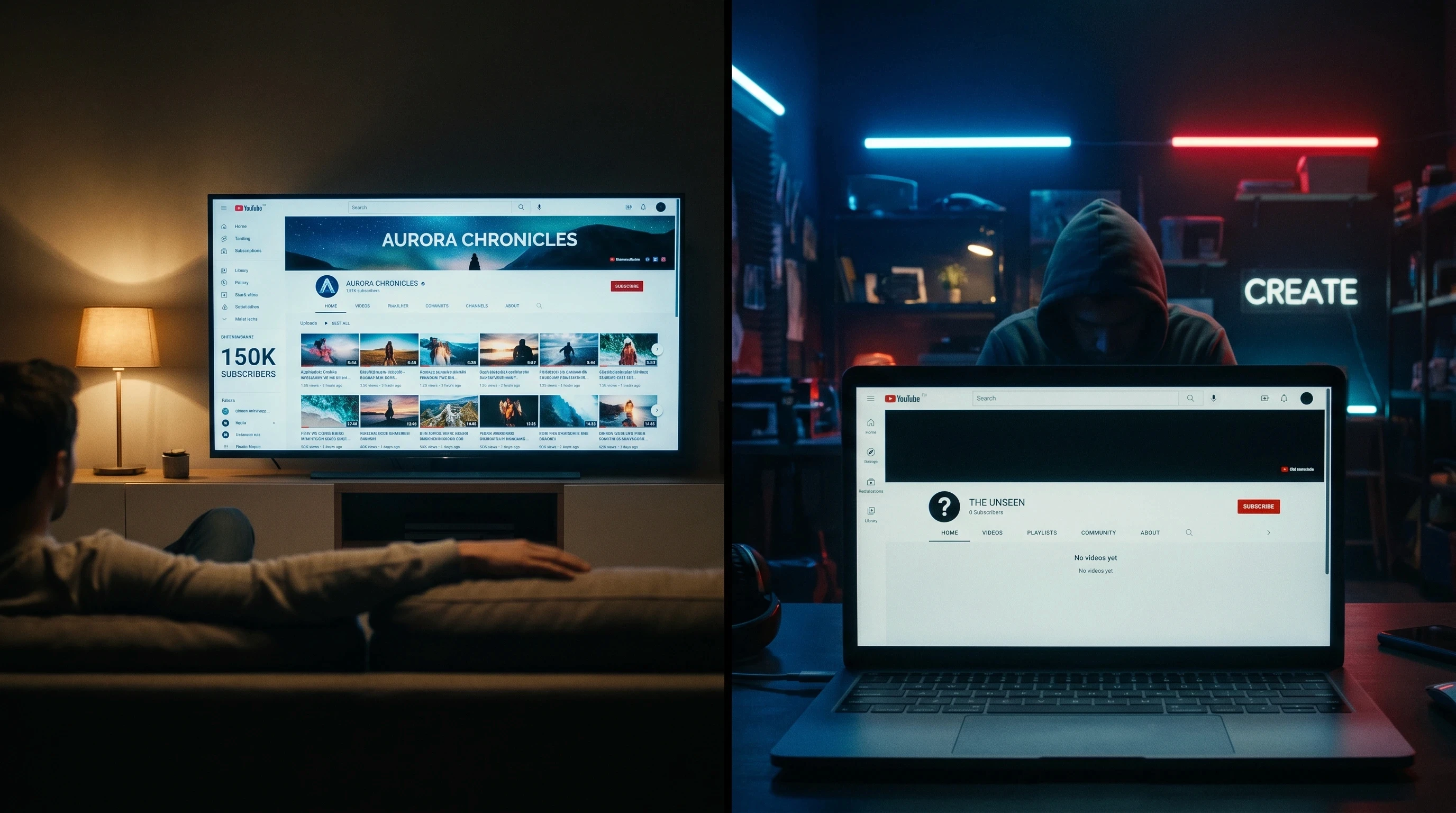
What "Ask YouTube" Means for How Your Buyers Find You
There's one more May 2026 development that doesn't have a headline yet but will.
YouTube's new "Ask YouTube" AI search feature lets users ask direct questions and get AI-generated answers pulled from YouTube content specifically, using video transcripts, channel authority, and metadata to determine what gets cited.
Think about what that means in practice. A founder in your target market sits down and asks YouTube: "Who are the best consultants for B2B lead generation?" or "Which financial advisors actually explain tax strategy well?" or "What's the best agency for building a YouTube channel for my business?"
The answer gets pulled from YouTube's content ecosystem. Channels with established authority, consistent publishing, and clear topical positioning get cited. Channels that barely exist, or post sporadically without a strategy, get nothing.
This is a discovery mechanism that didn't exist six months ago. It will become the default research behaviour for B2B buyers within the next 12 to 18 months. The founders building authoritative YouTube channels right now are building the exact asset that gets cited when buyers ask those questions. The founders waiting are building nothing that can be cited.
The Real Problem Isn't Motivation. It's Capacity.
We know you already understand YouTube's value. You wouldn't still be thinking about it if you didn't.
The reason most B2B founders haven't started isn't a knowledge problem. It's a capacity problem. Producing one high-quality, strategically positioned YouTube video per week, scripted well, filmed properly, edited tightly, optimised for search, published consistently, and then analysed to refine the next one, is close to a full-time job. In parallel with running a business, it's not realistic for most founders.
The ones who try to do it themselves almost always hit the same wall. They film a few videos. The production quality is inconsistent. The topics are chosen by gut feel rather than search data. The publishing cadence breaks when a client situation comes up. Roughly 90% of YouTube channels show no activity after six months of creation, and the pattern is almost always the same: a burst of effort, followed by a gap, followed by quiet abandonment.
Trying to DIY every aspect of YouTube, scripting, filming, editing, thumbnails, SEO, and analytics, is the single most cited reason channels stall, because the learning curve across all of those disciplines is genuinely steep and the time cost is unsustainable for anyone running a business simultaneously.
That's not a failure of discipline. That's a failure of system. Creators who post inconsistently lose momentum with both the algorithm and their audience at the same time, and recovering that momentum after a gap takes longer than most founders expect.
What we build at ChannelCraft is the system. Strategy, scripting, production, YouTube SEO, Shorts repurposing for the new Google TV distribution layer, and pipeline attribution through FunnelYT, our proprietary tool that tracks exactly which videos are generating leads and contributing to closed revenue. The founder shows up for the content itself. We handle everything else.
Most of our clients spend less than 3 hours per month on their channel. The channel grows consistently regardless of how busy their quarter is. And as YouTube's platform shifts, like the ones announced this week at Brandcast, we adapt the strategy so our clients' channels are always positioned for the new landscape, not the old one.
At ChannelCraft, we build high-performance YouTube channels that not only look great but also drive real business results.