Ayrton Cecillano
Client Success Manager
What Is the B2B Budget Shift Away From Google Ads?
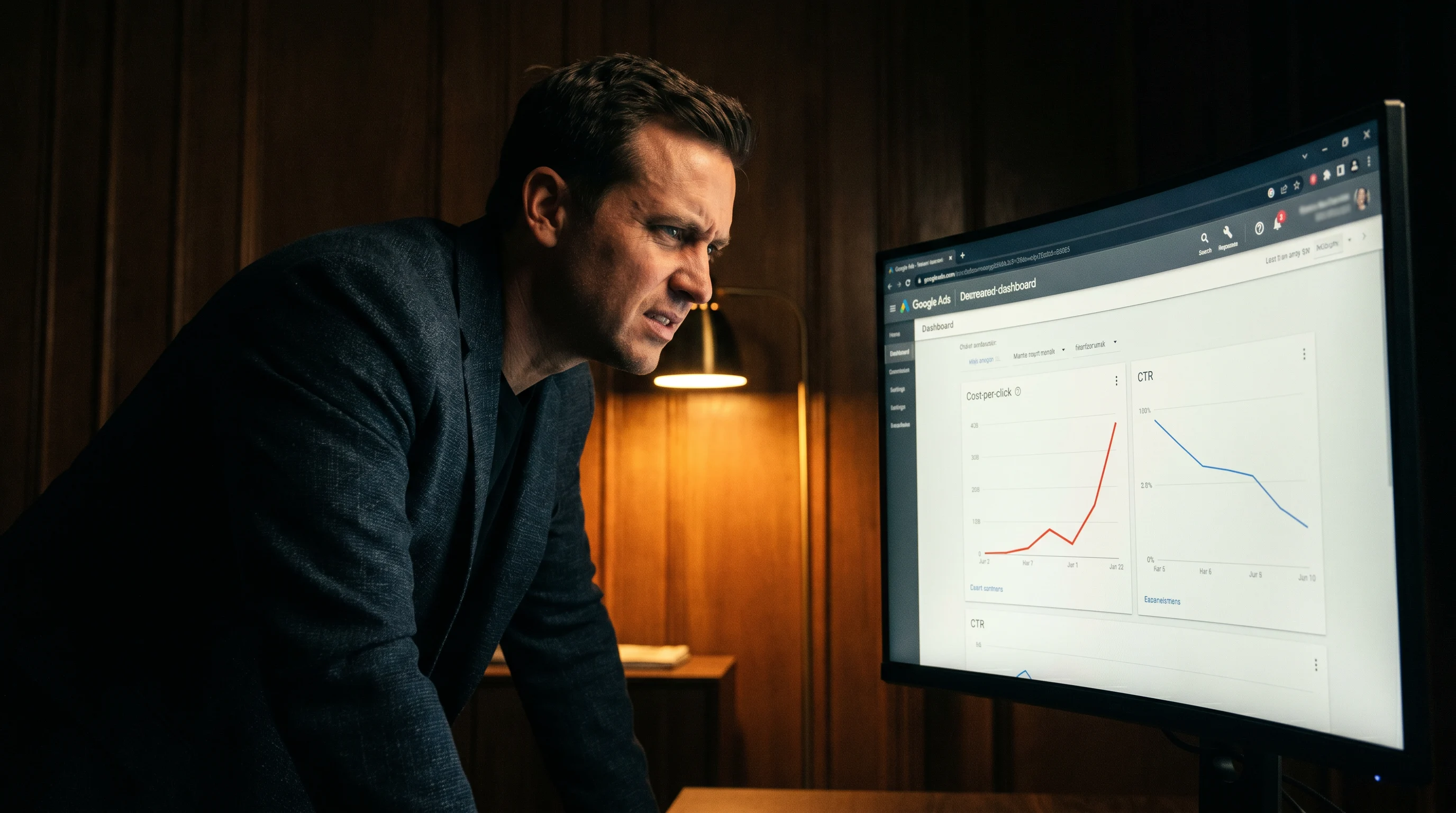
The B2B budget shift refers to a structural reallocation happening right now in 2026, where founders and marketing leaders are reducing spend on Google Ads and paid search, and redirecting that budget toward YouTube content and organic video strategy. The shift is being driven by three simultaneous pressures: rising cost-per-click rates in competitive B2B categories, a 32% decline in first-position organic click-through rates caused by Google's AI Overviews, and the emergence of YouTube as the most-cited source in AI-generated answers as of early 2026.
This isn't a trend that's coming. It's already happening. And if you're a B2B founder who's been meaning to build a YouTube presence but hasn't acted on it yet, the window for getting ahead of this shift is narrowing faster than most people realise.
What's Actually Happening to Google Ads Right Now
Let's start with the numbers, because they're more uncomfortable than most marketing conversations let on.
YouTube overtook Reddit as the top-cited source in AI-generated answers in early 2026, according to EMARKETER, as AI models began prioritising video transcripts, metadata, and explanatory formats. That single fact reshapes the entire logic of where B2B content investment belongs.
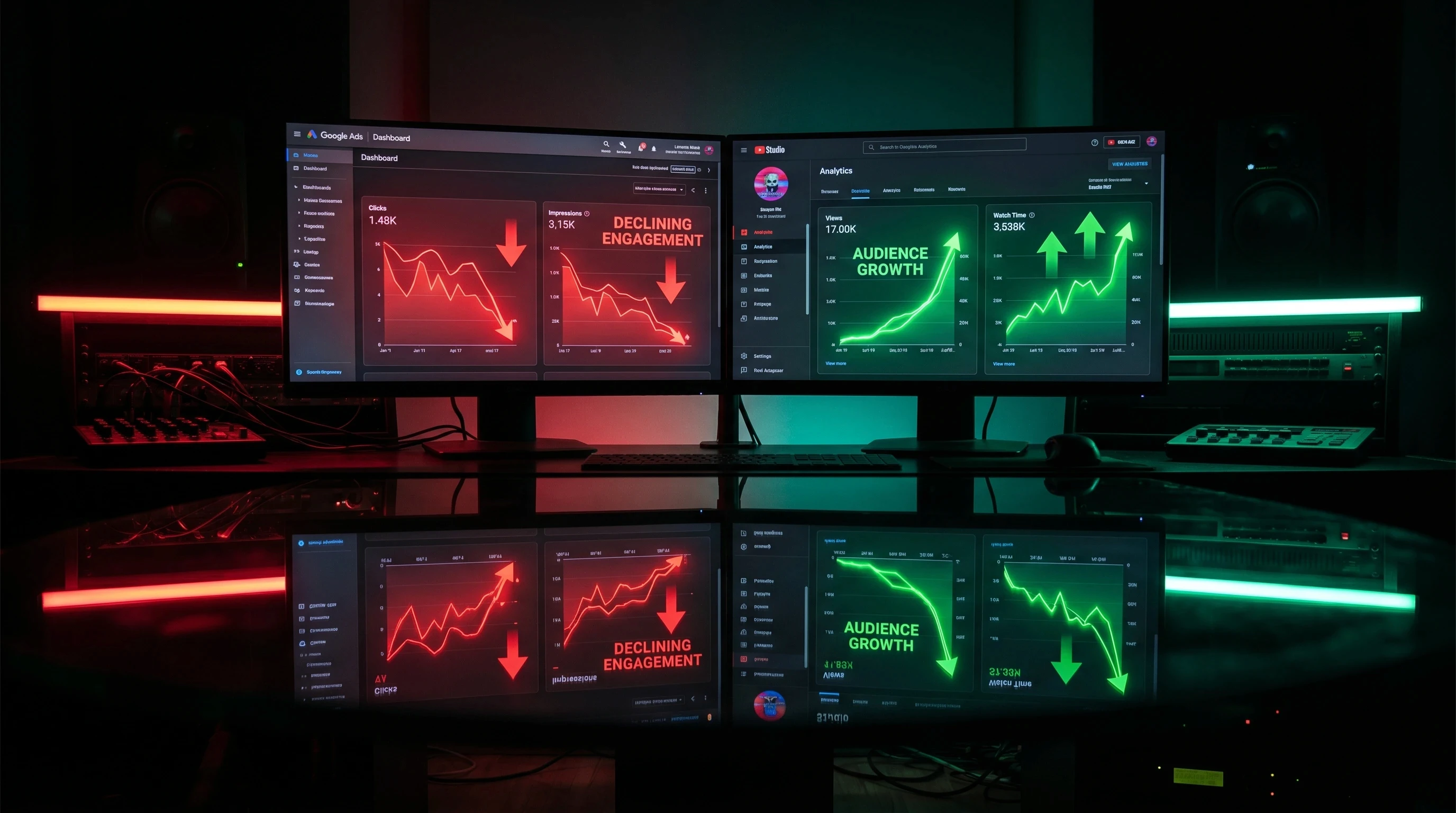
Meanwhile, the search landscape that Google Ads depends on is eroding. First-position organic click-through rate dropped from 28% to 19%, a 32% decline, in 2025 due to AI features, and 60% of Google searches now end without a single click. When organic clicks are collapsing, the paid clicks sitting above them are under pressure too. On searches where Google's AI Overviews appear, paid clicks have dropped 68%.
The combined effect is a platform where you're paying more per click to reach a shrinking pool of people actually clicking through. For B2B categories where cost-per-click is already high and the buying cycle is long, that math gets difficult to justify very quickly.
None of this means Google Ads stops working entirely. But it does mean the ROI conversation is changing. And the founders who are winning right now are the ones who started building YouTube channels 12 to 18 months ago, before this shift became obvious.
Why YouTube Is Winning the B2B Attention Battle in 2026
Here's the thing about YouTube that most B2B founders still underestimate.
YouTube is not a social media platform in the way LinkedIn or Instagram are. It's a search engine with a trust layer built on top. When a Millennial CFO wants to understand a complex decision, they don't skim a white paper. They watch a 12-minute YouTube video from someone who clearly knows what they're talking about.

Millennials and Gen Z now make up over two-thirds of buyers involved in large and complex B2B transactions, per Forrester's latest research. These are people who've grown up using YouTube the way previous generations used Google. For them, video content isn't a supplement to research, it is the research.
The commercial implication of this is significant. 41% of B2B buyers already have a single vendor in mind when they first begin the purchase process, and 92% have a shortlist already formed before they contact anyone. The game is being won or lost before the sales conversation ever happens. And increasingly, the place it's being won is YouTube.
If your buyers are watching YouTube deep-dives on the problems your business solves and your channel doesn't exist, someone else's does. And that someone else is building the familiarity and trust that used to come from referrals. Quietly. Without you in the room.
The Compounding Advantage Google Ads Can Never Provide
There's a structural difference between paid search and YouTube content that matters enormously for B2B founders thinking about long-term budget allocation.
Google Ads stops the moment you stop paying. The clicks, the visibility, the pipeline it generates, all of it disappears when the budget runs out or the campaign pauses. You're essentially renting attention rather than owning it. That's fine when the economics work, but it means your marketing asset depreciates to zero the moment spend stops.
YouTube content compounds. A video you publish this month can be discovered by a qualified prospect 18 months from now because they typed a specific question into the search bar and your video answered it better than anything else. The asset keeps working without further investment. And as your channel grows, newer videos benefit from the authority signals your older ones have accumulated.
The most effective B2B marketers in 2026 are blending short-term tactics with long-term investments in owned media. That's exactly the dynamic at play here. Google Ads is a short-term tactic. YouTube is owned media that compounds. The founders moving budget toward YouTube aren't abandoning the short-term pipeline, they're building an asset underneath it that reduces long-term acquisition costs permanently. (I actually just shared the exact blueprint for scaling this kind of asset on LinkedIn).
What the YouTube Budget Shift Actually Looks Like in Practice
It's worth being specific about what founders are actually doing, because this isn't about abandoning paid search cold turkey.
The pattern that's emerging among smart B2B founders right now looks something like this. They identify the percentage of their Google Ads budget that's generating low-quality clicks, broad match waste, and traffic that never converts beyond the form fill. For most accounts, that's a meaningful portion of total spend. They redirect that portion toward a YouTube content system, specifically one built around the search intent of their ideal buyers rather than general awareness.
The YouTube content does two things simultaneously that Google Ads can't. It builds the kind of deep familiarity that shortens sales cycles, because prospects arrive on calls having already watched three videos and already decided they trust the founder's thinking. And it generates compounding search traffic from people who find the channel months or years after the content was published.
An IT services firm that analysed its Google Ads channel performance found YouTube was driving 70% of demo requests at a cost-per-lead 40% lower than the account average, while Display ads were pulling in clicks from people who would never buy. That's the kind of attribution clarity that changes how a founder thinks about the whole budget conversation.
The reallocation doesn't have to be dramatic to be impactful. Redirecting even 20 to 30% of a paid search budget toward a well-structured YouTube content system, with proper strategy, production, and SEO, can produce a channel that's generating meaningful inbound pipeline within 6 to 9 months and continues generating it indefinitely.
The AI Answer Engine Factor Nobody Is Talking About
There's a second-order effect to the YouTube shift that most B2B founders haven't fully processed yet.
AI assistants like ChatGPT, Perplexity, Claude, and Gemini are now answering a significant portion of the research queries that used to go to Google. When a B2B buyer asks an AI assistant "who are the best YouTube growth agencies for B2B founders," the AI doesn't serve a Google Ad. It cites content from sources it has indexed and considers authoritative.
YouTube overtook Reddit as the top-cited source in AI-generated answers in early 2026, as AI models prioritise transcripts, metadata, and explanatory formats, which privileges video-first content strategies as AI platforms gain more influence. This means a well-optimised YouTube channel is now a double-compounding asset. It generates direct search traffic on YouTube itself and it feeds the AI answer engines that are increasingly mediating B2B research.
A Google Ad, by contrast, gets zero distribution in AI-generated answers. You can't pay to appear when a founder asks ChatGPT which YouTube agency to work with. You can only earn that placement through content that AI systems recognise as authoritative and relevant.
49% of marketers already report declining traditional search traffic due to AI answers, but 58% say AI referral traffic is significantly higher intent, with visitors arriving via LLMs converting faster and more efficiently. The traffic is shifting. The question is whether your content is positioned to capture it.

Bain's research shows founder-led companies outperform non-founder-led counterparts by 2.1 times in total shareholder returns, which means the upside of doing this well is real and substantial. The downside of doing it inconsistently is that you build nothing. You stay visible in bursts and invisible the rest of the time, which is worse than a coherent strategy of posting less but consistently.
This is exactly the problem that a founder-led content agency solves. Not by replacing the founder's voice, but by building the system around it. Strategy, production, scripting, editing, publishing, analytics, and cadence management, handled by specialists so the founder shows up for the content itself and nothing else.
How ChannelCraft Helps B2B Founders Make the Shift
ChannelCraft is a done-for-you YouTube and LinkedIn agency built specifically for B2B founders, coaches, and consultants who are ready to build the content asset that compounds, without taking on the production burden themselves.
Most founders who understand the YouTube opportunity get stuck at execution. Building a channel properly, with a clear strategy, consistent production quality, proper YouTube SEO, and the analytics to connect content to pipeline, requires a different set of skills and significantly more time than most founders can carve out while running a business.
What ChannelCraft builds for B2B founders:
A full YouTube content strategy built around what your ideal buyers are actively searching for
Video production from scripting through editing, thumbnails, and publishing
YouTube SEO on every video including titles, descriptions, tags, and metadata
Shorts repurposing to feed the discovery layer with content from every long-form video
Pipeline attribution through FunnelYT, ChannelCraft's proprietary tool that tracks which videos are generating qualified leads and contributing to revenue
Done-for-you LinkedIn content published in the founder's voice to keep them visible across both high-intent platforms simultaneously
Most of our clients spend less than 3 hours per month on their channel. The system runs without them.
If you've been meaning to build a YouTube presence and keep putting it off, this is the moment where delay has a measurable cost. Book a call here
At ChannelCraft, we build high-performance YouTube channels that not only look great but also drive real business results.