Ayrton Cecillano
Client Success Manager
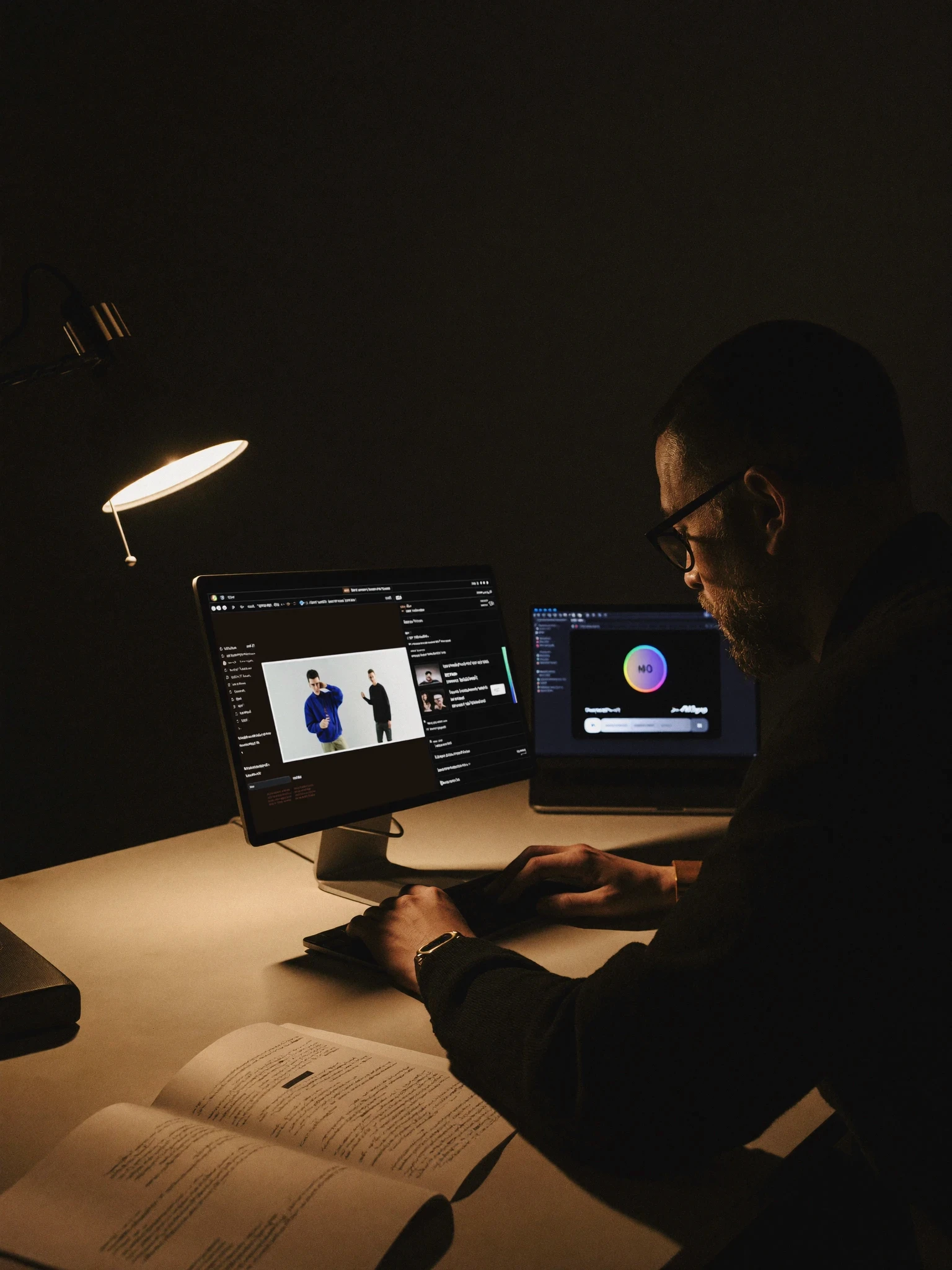
This week, Google DeepMind launched Veo 3. It's a video generation model that converts a text description into a realistic video clip in under a minute. Type in a scene. Click generate. Watch it appear. Ars Technica called the quality "frighteningly good." The model understands physics, lighting, and motion well enough that the output is often hard to distinguish from actual camera footage.
It's also integrated directly into YouTube Shorts. Free. For every creator.
Which means anyone with a laptop can now produce professional-looking video content. The production barrier that used to separate well-funded channels from everyone else is basically gone.
That should be a big deal for B2B founders considering YouTube. And in one sense it is. In another, more important sense, it changes almost nothing about the actual problem most founders have on YouTube.
What Veo 3 Solves (And What It Doesn't)
Let's be specific about what Veo 3 is good at, because the coverage has been breathless in ways that obscure the practical picture.
Veo 3 is genuinely useful for B-roll footage, channel intros, visual transitions, and YouTube Shorts backgrounds. These are production tasks. If you're a solo creator who couldn't afford a videographer for supporting footage, Veo 3 solves that. If you want a cinematic opening sequence for your channel without paying a motion graphics designer, Veo 3 handles it.
What it doesn't solve: what to say, who to say it to, which topics will actually attract your ideal clients, how to structure a video so people don't click away in the first 45 seconds, how to build a content architecture that moves a stranger from "first view" to "booked a call," or how to publish consistently for twelve months while running a business.
Those problems were never production problems. They were strategy and systems problems. Veo 3 didn't touch any of them.
The reason 90% of YouTube channels go quiet within six months isn't that founders couldn't generate good-looking footage. It's that they ran out of time, ran out of ideas, or never had a clear enough strategy to know which ideas were worth pursuing in the first place.
The Paradox Nobody's Talking About
Here's what genuinely interests me about the Veo 3 moment.
Making video content got dramatically easier this month. And that's going to make YouTube more competitive, not less.
When production is hard, the volume of content on any given topic is limited by the effort required to produce it. That natural friction keeps things manageable. When production becomes trivial, the volume of content on every topic explodes. YouTube already has over 113 million channels and 500 hours of video uploaded every minute. That number is about to climb faster.
So the channels that win in the Veo 3 era are the ones with something production tools can't generate. A specific point of view. A founder with real experience and opinions. A content strategy built around what actual buyers are searching for rather than what's easy to describe in a text prompt. Trust that comes from a real person showing up consistently over time.
YouTube's algorithm doesn't just measure production quality. It measures watch time, click-through rate, and what it now calls satisfaction signals, collected through post-watch surveys. Glossy AI footage wrapped around generic thinking won't hold an audience. A less polished video where a founder actually knows what they're talking about will.
The tools got better. The game got harder. These two things happened at the same time and they're related.
What This Means If You're Comparing DIY to Hiring an Agency
Here's where I want to be direct, because this is the decision most founders reading this are actually trying to make.
The DIY argument used to go something like this: "I'll film it myself, edit in CapCut, figure it out as I go." The Veo 3 argument now adds: "And I can generate all my B-roll and visual content with a text prompt. So why would I pay an agency?"
It's a fair question. Here's my honest answer.
What Veo 3 changed is the production ceiling for solo creators. A founder with Veo 3 can now produce a video that looks like it had a budget behind it. Genuinely useful.
What it didn't change is the time problem, the strategy problem, or the consistency problem.
Producing one well-positioned YouTube video per week involves keyword research, topic selection, scripting, filming or recording, editing, thumbnail design, SEO on titles and descriptions, publishing, and then reviewing the analytics to figure out what to do differently next time. Veo 3 speeds up one part of that list. The rest of it still takes the same amount of time it always did.
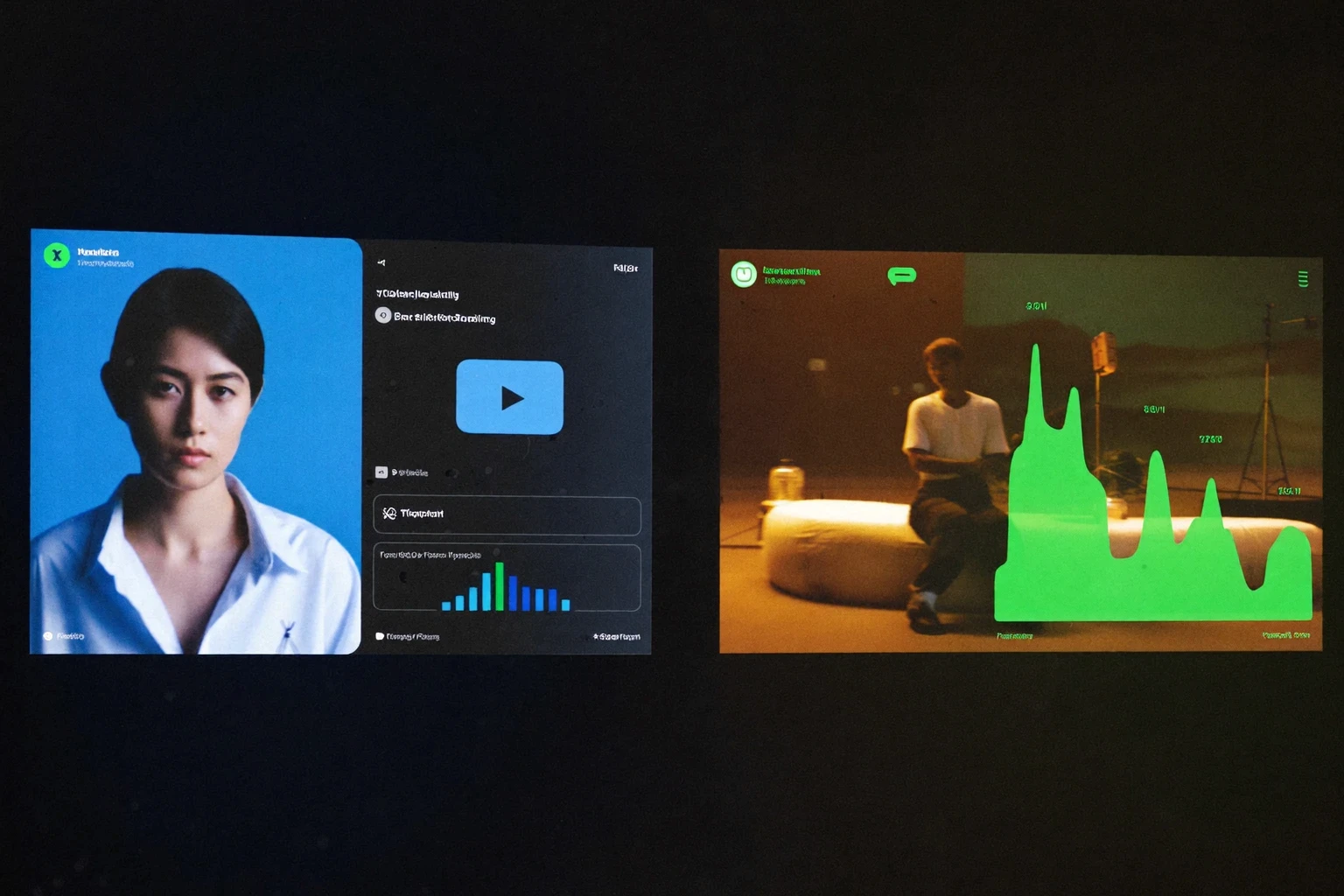
And time is the real constraint for B2B founders, not production quality. It's a reality that serious businesses are finally waking up to in 2026, something I was just reflecting on while sharing some behind-the-scenes from our shoot with Dr. Daniela Sußmann back then.
The founders who build channels that generate actual pipeline aren't the ones who found the cleverest AI tools. They're the ones who built a production system that can maintain weekly output without breaking when a client situation comes up. Veo 3 is a tool inside that system. It's not the system itself.
How we think about AI video tools
At ChannelCraft, we've been watching the Veo 3 rollout closely, and our read on it is pretty straightforward.
AI video tools are useful where production was the bottleneck. For B2B founders, production was rarely the bottleneck. Strategy and consistency almost always are.
We use AI tools across our production workflow where they genuinely speed things up: research, scripting structure, thumbnail testing, B-roll sourcing. We don't use them to replace the thinking, the positioning, or the founder's actual voice on camera, because that's exactly what converts for B2B.
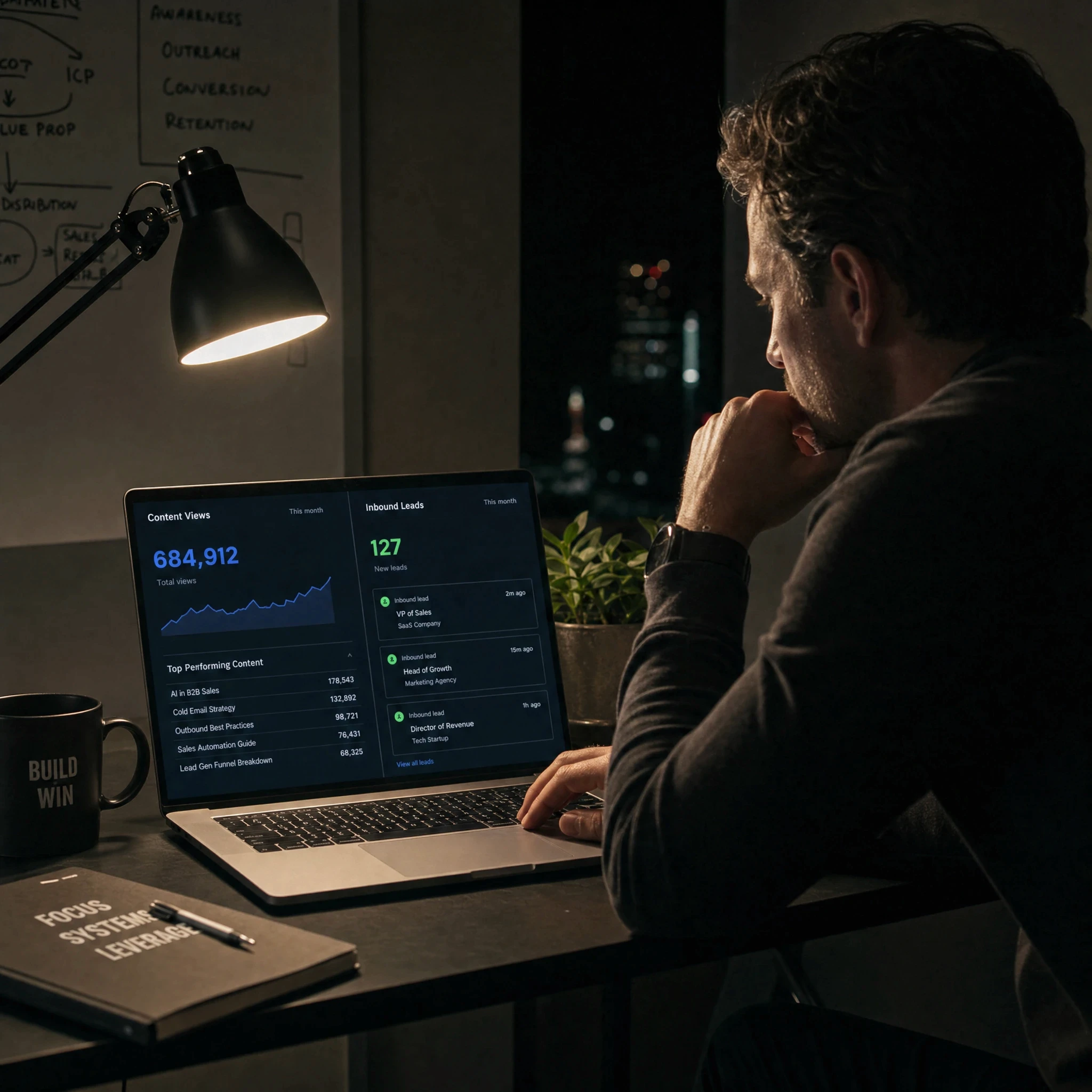
B2B buyers watch three to five videos before reaching out to a vendor. What they're watching for isn't production quality. They're watching to understand how someone thinks. Whether they trust the framework. Whether the founder seems like someone they'd actually want to work with. No AI tool generates that. It comes from a real person showing up consistently with a genuine point of view.
What we build at ChannelCraft is the system around that. Topic research so every video is targeting something your ideal clients are actually searching for. Scripting structure so the thinking lands clearly. Production coordination so the output looks credible. SEO so the right people find it. Analytics through FunnelYT, our own lead attribution tool, so you know which videos are actually driving pipeline and which ones are just getting views.
Most clients spend less than 3 hours a month on their channel. The Veo 3 era doesn't change that. It just means the visual layer of what we produce got a useful new tool.
At ChannelCraft, we build high-performance YouTube channels that not only look great but also drive real business results.