Ayrton Cecillano
Client Success Manager
Most B2B founders building a YouTube channel are optimising for the wrong thing.
Not because they're uninformed. They've read the guides, watched the tutorials, maybe even hired someone to help with editing. They understand that YouTube is important. What they haven't figured out yet is the difference between content that grows a channel and content that generates a pipeline.
Those are not the same thing. And conflating them is probably the single most expensive mistake a B2B founder can make on YouTube, because it means two years of consistent effort producing content that grows an audience with no commercial relationship to what you sell.
Why Views and Leads Come From Different Types of Content
Here's something that doesn't get explained clearly enough in most YouTube advice.
YouTube's algorithm is optimised to keep people on YouTube. It rewards content that gets clicked, watched, and leads to more watching. That's a completely different objective from your business goal, which is to attract a specific type of buyer, build enough trust to earn a conversation, and eventually close a deal.
Content that wins the algorithm game isn't always content that wins the sales game. A broad, entertaining, shareable video about a topic adjacent to your niche might pull in 50,000 views. Most of those viewers will have no interest in buying what you sell. Meanwhile, a 14-minute breakdown of a very specific problem your ideal client faces might get 800 views. If 600 of those viewers are exactly the type of person who buys from you, that video is doing more commercial work than the one with 50x the audience.
According to research from OutlierKit, B2B channels focused on buyer intent topics consistently generate leads from a smaller, more targeted audience than channels optimising purely for reach. The distinction matters because it changes every decision downstream. What topics you cover, how you structure your videos, what call to action you use, how you measure whether any of it is working.
The channels generating real B2B pipeline in 2026 aren't the ones chasing the algorithm. They're the ones treating each video as a specific product built for a specific buyer at a specific stage of their decision making process.
What’s the YouTube Launch Changes for B2B Lead Generation
This is worth addressing specifically because it changes the strategic picture in a concrete way.
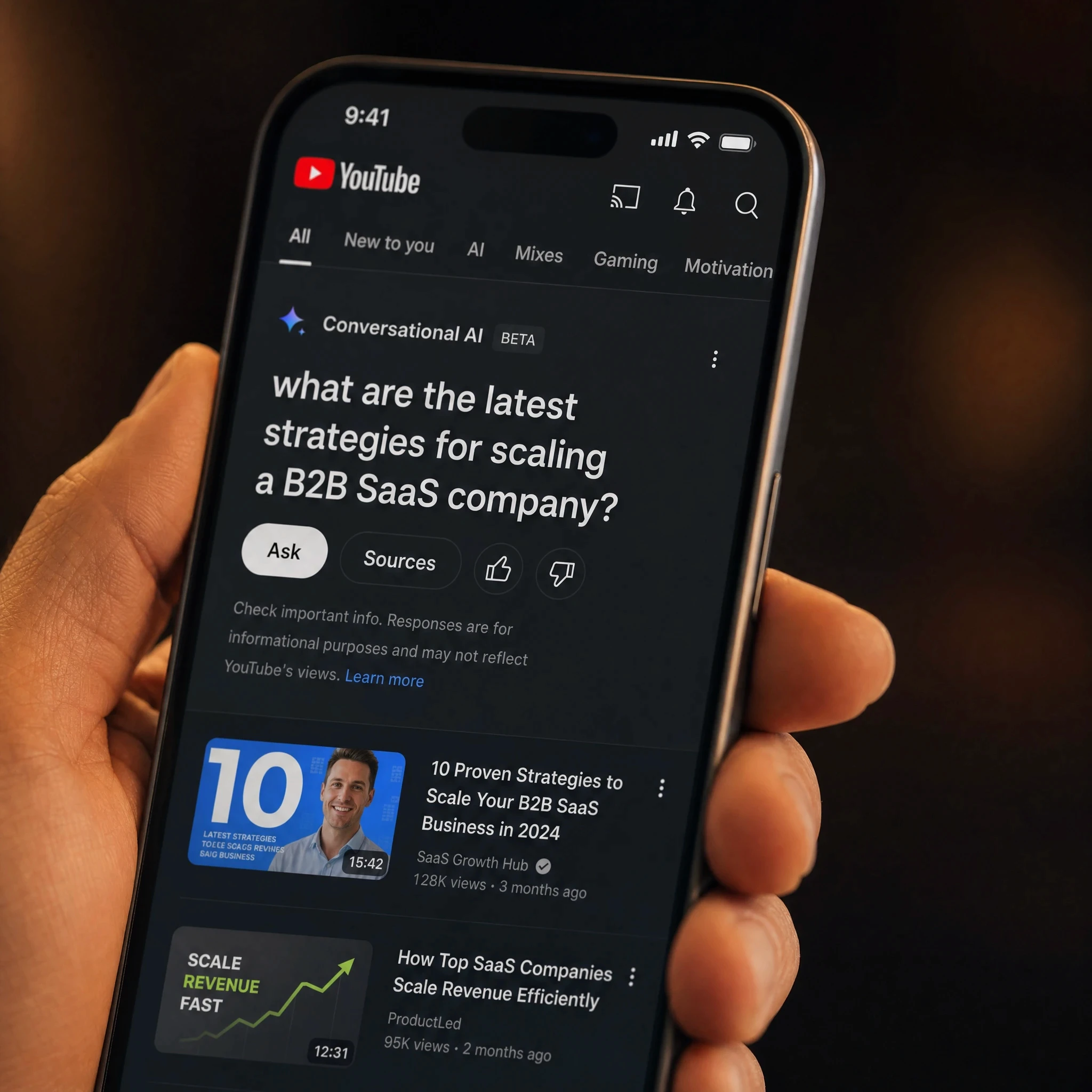
YouTube launched Ask YouTube at Google I/O on May 20, a Gemini-powered conversational search feature that generates answers directly from YouTube's video catalog without the viewer needing to watch a full video. Someone types "what should I look for when hiring a B2B content agency" and gets a synthesised answer pulled from across YouTube's content library, with citations to the videos it drew from.
For B2B founders, this does two specific things.
It creates a new discovery surface that rewards topical authority over production quality. Videos that clearly and specifically answer a named question get cited. Videos that are generally interesting don't. This pushes content strategy even further in the direction of buyer intent topics and away from broad awareness content.
And it raises the floor on what "being on YouTube" actually means for B2B. A channel with 10 well targeted, well structured videos now has a real shot at showing up in Ask YouTube answers for the right queries. A channel with 200 videos on loosely related topics probably won't, regardless of the view counts.
The practical implication is that content built around specific buyer questions just became more valuable overnight. Not as a future consideration. This week.
The Three Content Types That Actually Generate B2B Leads
Not all YouTube content is doing the same job. The channels converting viewers into qualified leads in 2026 are running three distinct types of content, and most B2B channels are only running one.
Type 1: Search-intent content.
These are videos built around specific questions your ideal clients are actively typing into YouTube. Not vague topics you find interesting. Specific queries with real buyer intent behind them.
The research is consistent on this. 95% of B2B buyers rely on video to guide their purchase decisions, and they find those videos through search. External traffic from social followings accounts for less than 3% of total YouTube views on most channels. The algorithm is finding your audience, not your existing network. If your videos aren't targeting the searches your ideal buyers are running, they're invisible to the people who would actually pay you.
The structure matters here too. 99% of YouTube viewers have never heard of you when they land on your video for the first time. They have no reason to trust you yet. Search-intent videos need to open by immediately signalling that the viewer is in the right place for the specific thing they searched. The first 30 seconds either confirm that or lose them.
Type 2: Consideration content.
This is the layer most B2B channels are missing.
A viewer finds your search intent video, watches it, learns something useful, and thinks "this person knows what they're talking about." What happens next depends entirely on whether you've built anything for them to go deeper into.
Consideration content is for the person who already found you and is evaluating whether to reach out. It goes deeper on your methodology. It handles the objections a warm prospect has before booking a call. It answers the questions a serious buyer needs answered before they're willing to commit time to a conversation.
Case study breakdowns. Process walkthroughs. Comparisons of different approaches to a problem your buyers face. "What it actually looks like to work with us" content. These videos don't need high view counts. They need to be findable by someone who's already watched two of your other videos and is deciding whether you're the right fit.
Without this layer, your channel generates awareness but the trust cycle never completes. Viewers come in through search, get value, and leave without a clear next step deeper into your ecosystem.
Type 3: Conversion content.
Specific videos designed to move a highly warm viewer toward a conversation.
Not a generic call to action at the end of every video. Dedicated pieces built for buyers who are close to deciding. A transparent breakdown of your pricing and what drives it. A "how to know if you're ready to work with an agency like ours" video. A founder Q&A addressing the most common concerns that come up in sales calls.
Brands using content as a lead driver see up to 6x higher conversion rates than those who don't, and the conversion lift is most pronounced at the bottom of the funnel, where content is doing the job a sales conversation used to do. Conversion content closes the gap between "I've been watching this channel for weeks" and "I finally reached out."
What Stopped Working in 2026
Some of this is worth naming directly because founders are still investing time and money into approaches that have quietly stopped producing.
Broad educational content without a target buyer.
Videos about general business topics, entrepreneurship, productivity, mindset. These can accumulate views from a wide audience that has no commercial relationship to what you sell. YouTube's content ecosystem is extremely saturated in this category. Unless you already have significant channel authority, competing for general business content audiences in 2026 is a difficult game with a low-quality outcome even when you win.
Repurposed LinkedIn or conference content.
Content built for a different context almost never performs well on YouTube without significant reworking. LinkedIn posts translated into scripts, webinar recordings uploaded without editing, conference talks cut into clips. These formats miss how YouTube viewers actually behave. YouTube viewers arrive with specific intent. They searched for something. If the video doesn't address that specific thing in the first 30 seconds, they leave. Repurposed content usually doesn't clear that bar.
High production, low strategy.
I've watched founders spend significant money on professional filming setups and polished editing for channels that generate nothing commercially useful. Production quality matters, but it's the least important variable. A video shot on a decent camera that answers a real buyer question will consistently outperform an expensive production built around the wrong topic.
84% of B2B video marketers report that video marketing has helped them generate leads, but that number reflects channels with an actual strategy behind them. The channels that invest in production first and strategy second are not in that group.
The Attribution Problem Nobody Solves
There's a practical issue that sits underneath all of this and most B2B channels never address it.
You can build a channel that's genuinely generating commercial interest and have no idea it's happening. Someone watches six of your videos over three weeks. They visit your website. They read your case studies. They book a call. In your CRM, they came from "direct" or "organic search." Your YouTube channel doesn't get credit for anything.
YouTube lead ads increase conversion by 24% when paired with retargeting, but most B2B channels aren't running retargeting and aren't tracking attribution in any meaningful way. The channel looks like it's generating views, not leads, because the data infrastructure to connect the two doesn't exist.
This is the difference between a YouTube channel and a YouTube channel built as a sales asset. The latter has UTM parameters in every description link, intake form questions that ask how prospects found you, and some mechanism for connecting content consumption to pipeline. Without that layer, the commercial impact of your channel is invisible to your own reporting, and very easy to deprioritise at exactly the moment it's starting to work.
At ChannelCraft, attribution is built into how we set up every channel from day one. FunnelYT, our proprietary lead tracking tool, connects specific videos to qualified inbound conversations and closed revenue. It's the part of the system most agencies skip entirely, and it's the part that makes the difference between knowing your channel is working and just hoping it is.

What a B2B Lead Generation Channel Actually Looks Like
The abstract version of this is easy to agree with and hard to act on. Here's what it actually looks like.
A channel generating consistent B2B leads in 2026 has a content library with all three types working together. Search-intent videos pulling in qualified strangers. Consideration content turning interested viewers into warm prospects. Conversion content capturing the ones who are ready to act.
Every video has a proportionate call to action. Not the same one on every video. The CTA should match where a viewer is in their relationship with your channel. A first-time viewer who found you through search needs a different next step than someone who's watched eight videos and is evaluating whether to reach out.
The publishing cadence is consistent enough to maintain algorithm momentum and audience expectation. One well targeted video per week is more commercially useful than three videos in a good month and nothing for six weeks.
Win rates in B2B correlate strongly with early vendor consideration, which is exactly what a properly built YouTube channel creates. Buyers who've watched your content before they contact you have already considered you, already formed a view on your credibility, and already moved you toward their shortlist. The channel does that work continuously, before any sales conversation happens.
And the channel is connected to attribution data that makes its commercial contribution visible. Not just views and subscribers, but qualified inbound contacts, discovery call bookings, and revenue traced back to specific videos.
That's the full picture. Most B2B channels have one or two of these pieces. Channels that generate real pipeline have all of them working together.
At ChannelCraft, we build high-performance YouTube channels that not only look great but also drive real business results.