Ayrton Cecillano
Client Success Manager

Most business owners treating YouTube the same way they did in 2022 are quietly getting left behind.
Not because they're lazy. Not because their content is bad. But because the platform has changed in ways that aren't obvious unless you're watching closely, and the strategies that used to work reasonably well have either stopped working entirely or now require a level of execution that most teams just aren't set up for.
The good news: the fundamentals of a strong YouTube content strategy for business are actually clearer now than they've ever been. The platform has matured. The algorithm signals are better understood. And for B2B businesses specifically, the opportunity to build a real inbound engine through YouTube is larger in 2026 than it's ever been.
Here's what you actually need to know.
The Platform Has Shifted More Than Most People Realise
Let's start with the context, because it matters.
YouTube's CEO Neal Mohan outlined the platform's priorities for 2026 in his annual letter to creators, and the implications for businesses are significant. YouTube is now the number one streaming platform on TV, consistently outpacing Netflix, Disney+, and every other streaming service in the US in total watch time. People aren't just watching YouTube on their phones during commutes anymore. They're watching on 65-inch screens in their living rooms, in the same way they used to watch cable.
That changes things for B2B businesses in a specific way. Your buyers aren't just scrolling a social feed. They're sitting down and consuming content with real attention. Which means the depth of impression you can make through a well-produced, well-positioned YouTube channel is substantially higher than almost any other marketing channel available to you right now.
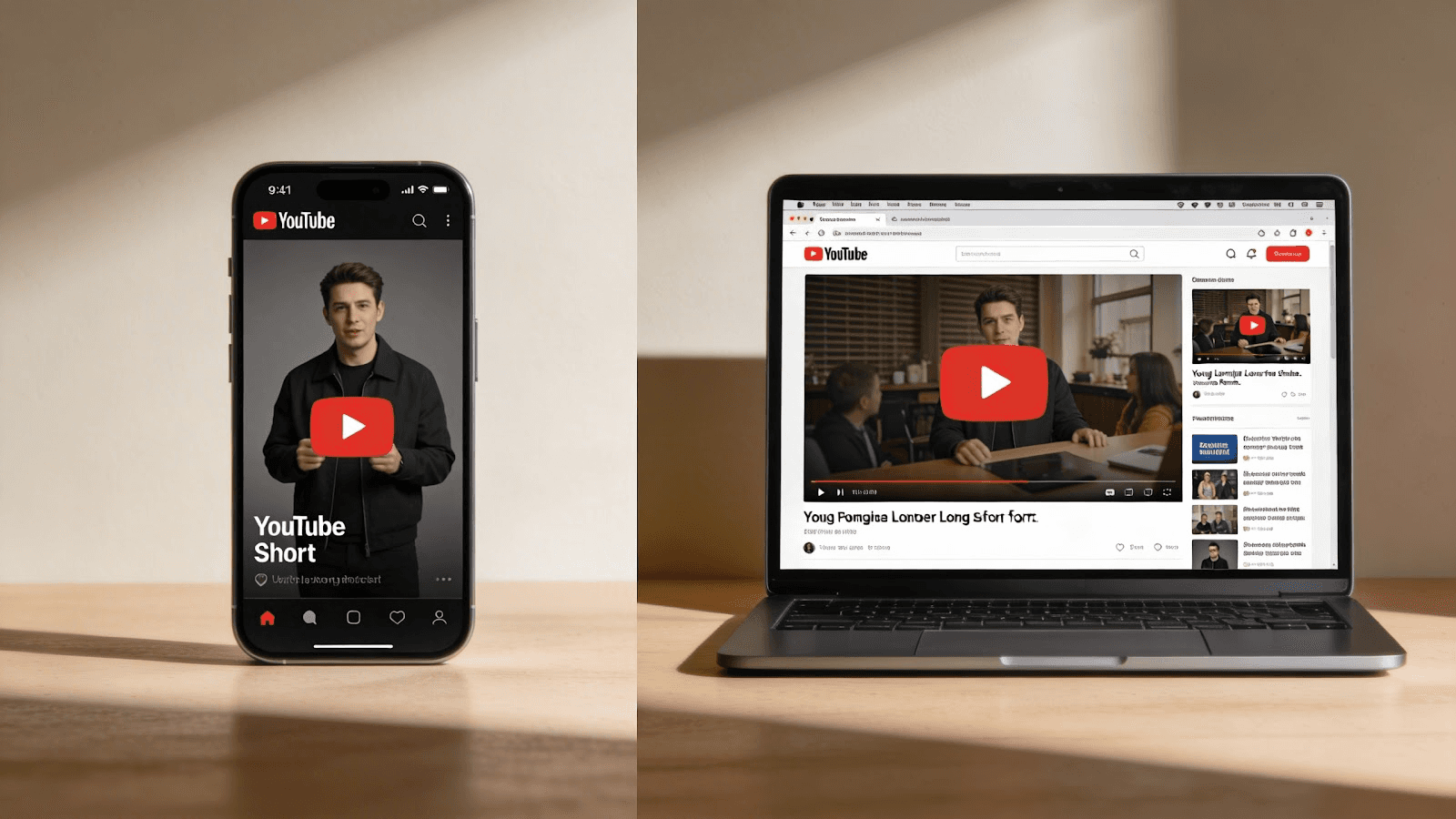
The second major shift is that YouTube now has over 200 billion daily Shorts views and Shorts have become the platform's primary discovery surface. This is not optional context. For any B2B business building a YouTube presence in 2026, Shorts are no longer a nice-to-have bolt-on. They're the front door through which most new viewers will encounter your brand for the first time.
These two facts together, long-form content consumed with TV-level attention, and Shorts as the discovery layer, define the strategic framework every business channel needs to be built around right now.
The Only YouTube Strategy That Works for B2B in 2026
There's a lot of noise about YouTube strategy. Most of it is written for creators chasing subscribers and ad revenue. B2B businesses have a completely different goal and a completely different context.
Your buyers aren't going to subscribe because they love your content. They're going to watch your videos because those videos answer specific questions they're already asking. And if the answers are good enough, and consistent enough, they'll start to associate your brand with the kind of expertise they trust.
That requires a specific type of content structure. Not random uploads. Not a mix of whatever felt interesting that week. A deliberate system with three distinct layers working together.
Layer 1: Search-based long-form content.
These are the 10 to 20-minute videos built around questions your ideal clients are actively typing into YouTube and Google. Think "how to generate leads from LinkedIn without cold outreach" or "best YouTube strategy for consultants." Topics with real search demand, real buyer intent, and relatively low competition from established channels.
According to research from OutlierKit, B2B buyers watch 3 to 5 videos before contacting you. These search-based videos are the ones they're finding before they know your name. If you're not showing up in those searches, someone else is.
Layer 2: Shorts as a discovery and testing engine.
Every long-form video you produce should be generating 3 to 5 Shorts. A sharp clip from the middle of the video. A counterintuitive take from the intro. A specific stat or framework that stands alone as a 45-second piece of content.
Research from 90 Seconds on 2026 B2B video trends confirms that short-form content has become the default top-of-funnel play for serious B2B brands. It's how you test messaging, scale reach, and surface your channel to buyers who would never have found a 15-minute video in search. Shorts that perform well get pushed to new audiences automatically, and the best-performing ones become data on which topics are resonating with your specific audience.
Layer 3: Content that handles objections and closes consideration.
This is the layer most B2B channels are missing entirely. These are videos specifically designed for buyers who are already aware of you and evaluating whether to reach out. Case study breakdowns. Framework deep-dives. Honest comparisons of different approaches to a problem. "What working with us actually looks like" content.
These videos don't need high view counts. They need to be the right videos for someone who has already watched two or three of your search-based videos and is trying to decide whether to contact you. Getting this layer right is what takes a YouTube channel from "generates some awareness" to "consistently produces inbound pipeline."
The YouTube SEO Rules That Have Changed in 2026
If you haven't updated your understanding of YouTube SEO in the last 12 months, some of what you think you know is out of date.
The older approach was mostly about keywords. Put the right terms in your title, description, and tags, and the algorithm would rank you for those searches. That still matters. But it's now one of several signals, and increasingly, the signals that the algorithm weights most heavily are behavioural.
According to a detailed 2026 breakdown of the YouTube algorithm, the platform moved to what it calls "satisfaction-weighted discovery" in 2025. This means the algorithm now collects millions of post-watch survey responses asking viewers whether a video was worth their time, and uses that satisfaction signal alongside traditional watch time and retention data to decide which videos to recommend.
What this means practically is that a video with a technically perfect keyword strategy but mediocre content will now underperform compared to a video with strong audience satisfaction signals, even if the latter is less optimised. The algorithm has essentially become harder to game and easier to win at, if you're genuinely producing content people find valuable.
The specific factors that drive satisfaction in 2026 are worth knowing:
Watch through the first 30 seconds is still the critical filter. Videos that lose more than 40% of viewers in the first 30 seconds get deprioritised regardless of everything else. Your opening has to immediately signal to the viewer that this video is going to give them what they came for.
Session continuation matters more than it used to. If someone watches your video and then watches more content on YouTube, that's read as a satisfaction signal. If they close the app, it's a negative one. Structuring your content to naturally lead viewers to your next video, with a specific recommendation at the end, is now a genuine SEO tactic.
Content that generates real discussion gets more distribution. YouTube's own platform evolution data shows that channels adding genuine commentary and expertise consistently outperform those producing template-based or low-differentiation content.
What B2B Businesses Get Wrong About YouTube Strategy
Let's be specific about the most common mistakes, because they're fixable once you see them.
Posting without a content architecture. Most B2B YouTube channels are a mix of whatever got filmed. A team event here, a product explainer there, an interview that seemed like a good idea at the time. There's no through-line. No search strategy. No clear journey for a buyer to follow. This is the single biggest reason B2B channels post consistently and still generate zero pipeline.
Treating production quality as the primary variable. High production quality matters. But research on what actually drives YouTube growth in 2026 consistently shows that watch time and engagement are more influential than subscriber count or production budget for the algorithm. A genuinely useful, clearly structured video shot on a decent camera outperforms a beautifully produced video that doesn't hold attention. Most B2B teams invest in the wrong thing first.
Ignoring the Shorts layer entirely. 87% of B2B marketers in 2026 report that short-form content generates higher engagement rates than traditional long-form videos. Yet the majority of B2B YouTube channels post only long-form content and wonder why their discovery numbers stay flat. Shorts aren't separate from your YouTube strategy. They are the engine that fuels the reach of everything else.
No connection between content and pipeline. Views and subscriber counts are the metrics most channels optimise for by default. But for a B2B business, the only number that actually matters is qualified inbound inquiries. Without a clear call to action structure, a lead magnet, or some kind of next step built into your content system, you can accumulate a large audience and still generate no revenue from it.
What B2B Businesses Get Wrong About YouTube Strategy
Let's be specific about the most common mistakes, because they're fixable once you see them.
Posting without a content architecture. Most B2B YouTube channels are a mix of whatever got filmed. A team event here, a product explainer there, an interview that seemed like a good idea at the time. There's no through-line. No search strategy. No clear journey for a buyer to follow. This is the single biggest reason B2B channels post consistently and still generate zero pipeline.
Treating production quality as the primary variable. High production quality matters. But research on what actually drives YouTube growth in 2026 consistently shows that watch time and engagement are more influential than subscriber count or production budget for the algorithm. A genuinely useful, clearly structured video shot on a decent camera outperforms a beautifully produced video that doesn't hold attention. Most B2B teams invest in the wrong thing first.
Ignoring the Shorts layer entirely. 87% of B2B marketers in 2026 report that short-form content generates higher engagement rates than traditional long-form videos. Yet the majority of B2B YouTube channels post only long-form content and wonder why their discovery numbers stay flat. Shorts aren't separate from your YouTube strategy. They are the engine that fuels the reach of everything else.
No connection between content and pipeline. Views and subscriber counts are the metrics most channels optimise for by default. But for a B2B business, the only number that actually matters is qualified inbound inquiries. Without a clear call to action structure, a lead magnet, or some kind of next step built into your content system, you can accumulate a large audience and still generate no revenue from it.
At ChannelCraft, we build high-performance YouTube channels that not only look great but also drive real business results.